
Disclosure: This post contains affiliate links. If you purchase through these links, we may earn a small commission at no extra cost to you.
Trimming your dog’s nails is one of the most essential yet often overlooked parts of pet care. Many dog owners dread this task, not just because it can be stressful for both you and your pup, but also because choosing the wrong tool can lead to pain, injury, or even long-term discomfort for your furry companion. Overgrown nails aren’t just a cosmetic issue—they can force your dog’s toes to splay unnaturally, put strain on joints and tendons, and even lead to chronic pain or mobility problems over time. Sharp, untrimmed nails can also scratch furniture, flooring, or even you and your family members. Worse, neglected nails can grow into the paw pad, causing infection and severe pain that limits your dog’s ability to walk comfortably.
When it comes to trimming your dog’s nails, two tools dominate the market: dog nail grinders and dog nail clippers. Each has its own set of advantages, disadvantages, and ideal use cases, and the right choice depends on factors like your dog’s size, nail thickness, temperament, and your own comfort level with grooming. Nail clippers are the traditional, straightforward option, while grinders offer a gentler, more controlled approach. In this blog, we’ll break down the key differences between the two, analyze their pros and cons, safety features, and applicable scenarios, and help you decide which tool is the best fit for your dog.
Whether you’re a first-time pet parent or a seasoned groomer, this guide will provide you with all the information you need to make an informed decision, ensuring nail trimming is a stress-free experience for both you and your beloved pup. We’ll also include a comparison table, answer common FAQs, and offer practical tips to make the process easier—plus, we’ll highlight top product recommendations with purchase links to simplify your shopping.
Dog Nail Grinder vs Clipper: Detailed Comparison
To choose the right tool, it’s crucial to understand how each one works, what makes it unique, and when it’s most effective. Below, we’ll dive into a detailed analysis of dog nail grinders and clippers, covering their pros, cons, safety, and ideal scenarios.
1. Dog Nail Grinders
Dog nail grinders are handheld devices (usually electric or rechargeable) that use a rotating sandpaper or diamond bit to grind down your dog’s nails gradually. They work similarly to a high-powered nail file, shaving off thin layers of the nail until it reaches the desired length. Modern grinders often come with adjustable speeds, low-noise motors (usually below 50 decibels), and different port sizes to accommodate various nail sizes and thicknesses. Many 2026 models also feature LED lights to help locate the quick, adding an extra layer of safety for新手 (beginners). They’re designed to be gentle, reducing the risk of injury and making the process less stressful for anxious dogs.
Pros:
- Safety: The biggest advantage of grinders is their low risk of cutting the quick (the sensitive inner part of the nail that contains blood vessels and nerves). Since they grind the nail down gradually, you can stop at any time if you notice signs of the quick, eliminating the fear of accidental bleeding. This is especially helpful for dogs with dark nails, where the quick is hard to visualize.
- Smooth Finish: Grinders leave nails with a smooth, rounded edge, preventing sharp tips that can scratch furniture or skin. This is especially beneficial for dogs that spend a lot of time indoors or have a tendency to scratch aggressively.
- Anxiety-Friendly: High-quality grinders operate at low noise and minimal vibration—quieter than a hair dryer—making them ideal for dogs that are scared of clippers or loud sounds. Many dogs even grow to enjoy the sensation, as it’s similar to a gentle massage, and most adjust to the tool after a few short sessions.
- Versatility: Most grinders come with adjustable speeds and interchangeable bits (coarse for thick nails, fine for thin ones), making them suitable for dogs of all sizes—from small breeds with thin nails to large breeds with thick, tough nails. They can also handle irregularly shaped nails more easily than clippers.
Cons:
- Time-Consuming: Grinding takes longer than clipping, especially for dogs with long or thick nails. You’ll need to grind each nail in short bursts (10-15 seconds per nail) to avoid overheating the nail, which can cause discomfort for your dog. For dogs with very long nails, this process may take 10-15 minutes total.
- Hair Tangling Risk: For dogs with long fur around their paws, the grinder’s rotating bit can catch and tangle hair, causing pain or irritation. You’ll need to trim the fur around the nails before using a grinder to avoid this issue.
- Cost: High-quality electric grinders are generally more expensive than basic clippers, ranging from $20 to $50 or more. They also require charging or battery replacement, adding to long-term costs. However, their durability and safety make them a worthwhile investment for many pet parents.
- Learning Curve: It takes time to get used to using a grinder, both for you and your dog. You’ll need to desensitize your dog to the sound and sensation of the grinder, which may require multiple short sessions (with treats for positive reinforcement) before they’re comfortable.
Safety: When used correctly, grinders are very safe. To avoid injury, never press the grinder too hard against the nail (this can cause overheating or discomfort) and stop grinding if you see the quick (it will appear as a pink or red spot inside the nail). For dark-colored nails, grind in small increments and check the nail’s cross-section regularly—you’ll know you’re getting close to the quick when you see a gray or pinkish dot in the center. Always supervise your dog during grinding, and choose a grinder with a safety guard to prevent accidental contact with the skin. For best results, use the grinder in a well-lit area to better see the nail structure.
Applicable Scenarios: Grinders are ideal for anxious dogs or dogs that fear clippers. They’re also perfect for dogs with thin, brittle nails (which can split easily with clippers) and dogs with dark nails (where the quick is hard to see). They work well for all sizes of dogs, but are especially useful for small breeds with delicate nails and large breeds with thick nails that are hard to clip cleanly. [购买链接: Casfuy 6-Speed Dog Nail Grinder] (best value, with LED light) and [购买链接: Andis Cordless Dog Nail Grinder] (premium choice, low vibration) are top picks for 2026.

2. Dog Nail Clippers
Dog nail clippers are the traditional tool for trimming nails, available in two main styles: scissor-style (similar to human nail clippers) and guillotine-style (with a hole to insert the nail and a blade that cuts when you squeeze the handle). They work by snipping off the tip of the nail in one quick motion, making them a fast and efficient option for nail trimming. High-quality clippers are made with sharp, stainless steel blades to ensure clean cuts, and many come with safety stops to prevent over-cutting. Some 2026 models also feature LED lights to help locate the quick, making them safer for beginners.
Pros:
- Speed: Clipping is much faster than grinding—you can trim all of your dog’s nails in just a few minutes (2-5 minutes total), making it ideal for busy pet parents or dogs that don’t have the patience for long grooming sessions. This is especially useful for dogs that resist nail trimming.
- Affordability: Basic clippers are very affordable, ranging from $10 to $20. Even high-quality, professional-grade clippers are often cheaper than electric grinders, making them a budget-friendly option for pet parents on a tight budget.
- Simplicity: Clippers are easy to use, with a straightforward design that requires no charging or setup. They’re perfect for first-time pet parents who want a no-fuss tool for nail trimming, and they’re easy to store when not in use.
- No Hair Tangling: Unlike grinders, clippers don’t have rotating parts, so they won’t catch or tangle your dog’s fur. This makes them ideal for dogs with long hair around their paws, eliminating the need to trim paw fur beforehand.
Cons:
- Risk of Cutting the Quick: The biggest downside of clippers is the high risk of accidentally cutting the quick, which can cause bleeding, pain, and fear in your dog. This is especially common with dark-colored nails, where the quick is hard to see, or for inexperienced pet parents. A single bad experience can make a dog fear nail trimming for life.
- Jagged Edges: Clippers can leave sharp, jagged edges on the nail, which may scratch furniture or skin. You’ll need to file the nails with a separate nail file after clipping to smooth them out, adding an extra step to the process.
- Not Ideal for Thick Nails: For large breeds with thick, tough nails (like Golden Retrievers, German Shepherds, or Great Danes), basic clippers may not be strong enough to make a clean cut, leading to split or cracked nails. You’ll need a heavy-duty clipper for these breeds, which can be more expensive.
- Stress for Anxious Dogs: The sound of clippers (a sharp “snip”) can scare anxious dogs, leading to resistance or even aggression during nail trimming. Dogs that have had a bad experience with clippers (e.g., being cut too short) may develop a lifelong fear of the tool.
Safety: To use clippers safely, always trim only the tip of the nail (1-2 millimeters above the quick). For light-colored nails, you can see the quick as a pink line inside the nail—stop trimming just before this line. For dark-colored nails, trim small amounts at a time and check the cross-section of the nail; if you see a pink or gray dot, stop immediately. Always have styptic powder on hand to stop bleeding if you accidentally cut the quick—apply it gently and hold for 1-2 minutes to stop bleeding, or use cornstarch if you don’t have styptic powder available. Choose clippers with a safety stop (a small guard that prevents you from trimming too much) to reduce the risk of injury, and ensure the blades are sharp (dull blades can crush the nail instead of cutting it cleanly).
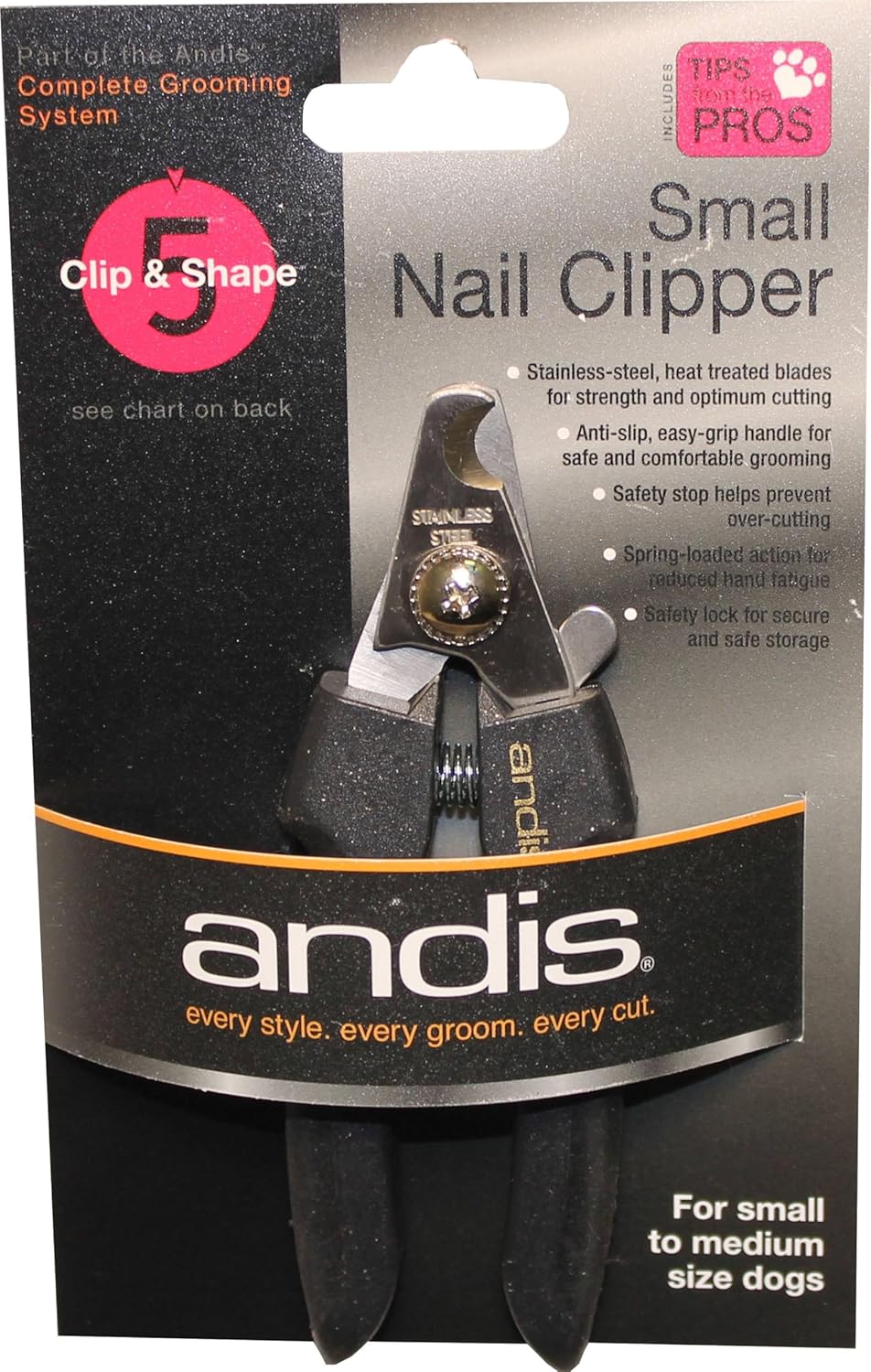
Applicable Scenarios: Clippers are ideal for dogs that are calm during grooming and have light-colored nails (where the quick is easy to see). They’re perfect for busy pet parents who want a fast, affordable tool, and for dogs with long fur around their paws (since there’s no risk of hair tangling). Scissor-style clippers work well for small breeds with thin nails, while guillotine-style clippers are better for medium to large breeds with thicker nails. [购买链接: Andis Pet Nail Clipper] (best overall, with safety stop) and [购买链接: Li’l Pals Dog Nail Trimmer] (best value, small breed-friendly) are top clipper picks for 2026.
Comparison Table: Dog Nail Grinder vs Clipper
| Feature | Dog Nail Grinder | Dog Nail Clipper |
| Safety (Risk of Cutting Quick) | Low—gradual grinding reduces accidental cuts; easy to stop before reaching the quick | High—easy to snip too much, especially with dark nails or inexperience |
| Speed | Slow—takes 10-15 seconds per nail; total time 10-15 minutes | Fast—takes 1-2 seconds per nail; total time 2-5 minutes |
| Nail Finish | Smooth, rounded edges—no need for additional filing | Jagged edges—requires filing to smooth |
| Cost | Higher ($20-$50+); requires charging/battery replacement | Lower ($10-$20); no ongoing costs |
| Learning Curve | Steeper—requires desensitizing your dog to sound/sensation | Gentler—easy to use for first-time pet parents |
| Best for Nail Type | Thin, brittle, or dark nails; irregularly shaped nails | Thick, strong nails (with heavy-duty clippers); light-colored nails |
| Best for Dog Temperament | Anxious, skittish, or clipper-phobic dogs | Calm, well-behaved dogs that tolerate grooming |
| Hair Risk | High—rotating bit can tangle long paw fur | Low—no moving parts to catch fur |
| Top 2026 Picks | [购买链接: Casfuy 6-Speed Dog Nail Grinder], [购买链接: Andis Cordless Dog Nail Grinder] | [购买链接: Andis Pet Nail Clipper], [购买链接: Li’l Pals Dog Nail Trimmer] |
Frequently Asked Questions (FAQ)
1. How often should I trim my dog’s nails?
The frequency of nail trimming depends on your dog’s activity level and lifestyle. For most dogs, trimming every 2-4 weeks is recommended, but some may need more frequent trims (every 1-2 weeks) if their nails grow quickly or they spend little time outdoors. Dogs that spend a lot of time outdoors (walking on concrete or grass) will naturally wear down their nails, so they may only need trimming every 4-6 weeks. Indoor dogs or dogs with low activity levels will need more frequent trimming (every 2-3 weeks) to prevent overgrowth. You’ll know it’s time to trim if you hear your dog’s nails clicking on hard floors—this is a sign they’re too long.
2. What should I do if I accidentally cut the quick?
If you cut the quick, don’t panic—while it’s painful for your dog, it’s not a serious injury. Immediately apply styptic powder (available at pet stores) to the bleeding nail, pressing gently for 1-2 minutes to stop the bleeding. You can also use cornstarch or flour if you don’t have styptic powder on hand. Avoid using alcohol or碘伏, as these can irritate the wound and make your dog more uncomfortable. Comfort your dog with treats and praise to help them stay calm. Avoid trimming that nail again until it’s fully healed (about 1-2 weeks). To prevent this from happening in the future, take smaller cuts or use a grinder for more control.
3. Can I use human nail clippers on my dog?
No, you should never use human nail clippers on your dog. Human clippers are designed for thin, flat human nails, while dog nails are thicker, curved, and have a different structure. Using human clippers can crush your dog’s nails, causing pain, split nails, or even injury to the quick. Always use clippers specifically designed for dogs—they have sharp, curved blades that are tailored to dog nails and are much safer and more effective.
4. How can I help my anxious dog get used to nail trimming?
Start by desensitizing your dog to the tool (grinder or clipper) in short, positive sessions. Let your dog sniff and explore the tool while giving them treats and praise. For grinders, turn it on at a low speed and let your dog get used to the sound before touching their nails. For clippers, practice opening and closing them near your dog’s paws (without cutting) to reduce fear. Keep sessions short (5-10 minutes) and stop if your dog becomes stressed. Over time, gradually increase the duration and introduce the tool to their nails, always rewarding calm behavior. Choosing a low-noise grinder can also help reduce anxiety for skittish dogs.
5. Do I need to file my dog’s nails after using clippers or grinders?
After using clippers, yes—clippers often leave jagged edges that can scratch skin or furniture, so filing with a nail file or emery board is recommended to smooth the edges. For grinders, filing is usually unnecessary, as they leave a smooth, rounded finish. However, if you notice any rough spots after grinding, a quick file can help perfect the nail’s shape.
Conclusion
Choosing between a dog nail grinder and clipper ultimately comes down to your dog’s unique needs, your comfort level, and your lifestyle. Neither tool is “better” overall—they simply serve different purposes, and the best choice will depend on factors like your dog’s temperament, nail type, and size.
Opt for a nail grinder if: your dog is anxious or afraid of clippers, has dark nails (where the quick is hard to see), has thin or brittle nails that split easily, or if you prefer a gentler, more controlled approach. Grinders are also a great choice for pet parents who want to avoid the risk of cutting the quick and don’t mind spending a bit more time on nail trimming. Our top picks—[购买链接: Casfuy 6-Speed Dog Nail Grinder] (best value) and [购买链接: Andis Cordless Dog Nail Grinder] (premium)—offer safety features like LED lights and low vibration to make the process easier.
Choose a nail clipper if: you’re a first-time pet parent looking for simplicity, you’re on a budget, your dog has light-colored nails (where the quick is easy to see), or you need a fast tool for busy days. Clippers are also ideal for dogs with long paw fur (no tangling risk) and calm dogs that tolerate grooming well. [购买链接: Andis Pet Nail Clipper] (best overall) and [购买链接: Li’l Pals Dog Nail Trimmer] (best value) are reliable options for most dogs.
Remember, the goal of nail trimming is to keep your dog comfortable and healthy—not to achieve perfection. Whichever tool you choose, take your time, use positive reinforcement, and prioritize your dog’s safety and comfort. With patience and the right tool, nail trimming can become a stress-free routine for both you and your furry friend. Regular trimming will not only protect your furniture and skin but also ensure your dog’s joints and paws stay healthy for years to come.
Check out our other guides: [best no-pull harness], [how to stop barking], and [best interactive toys for boredom].